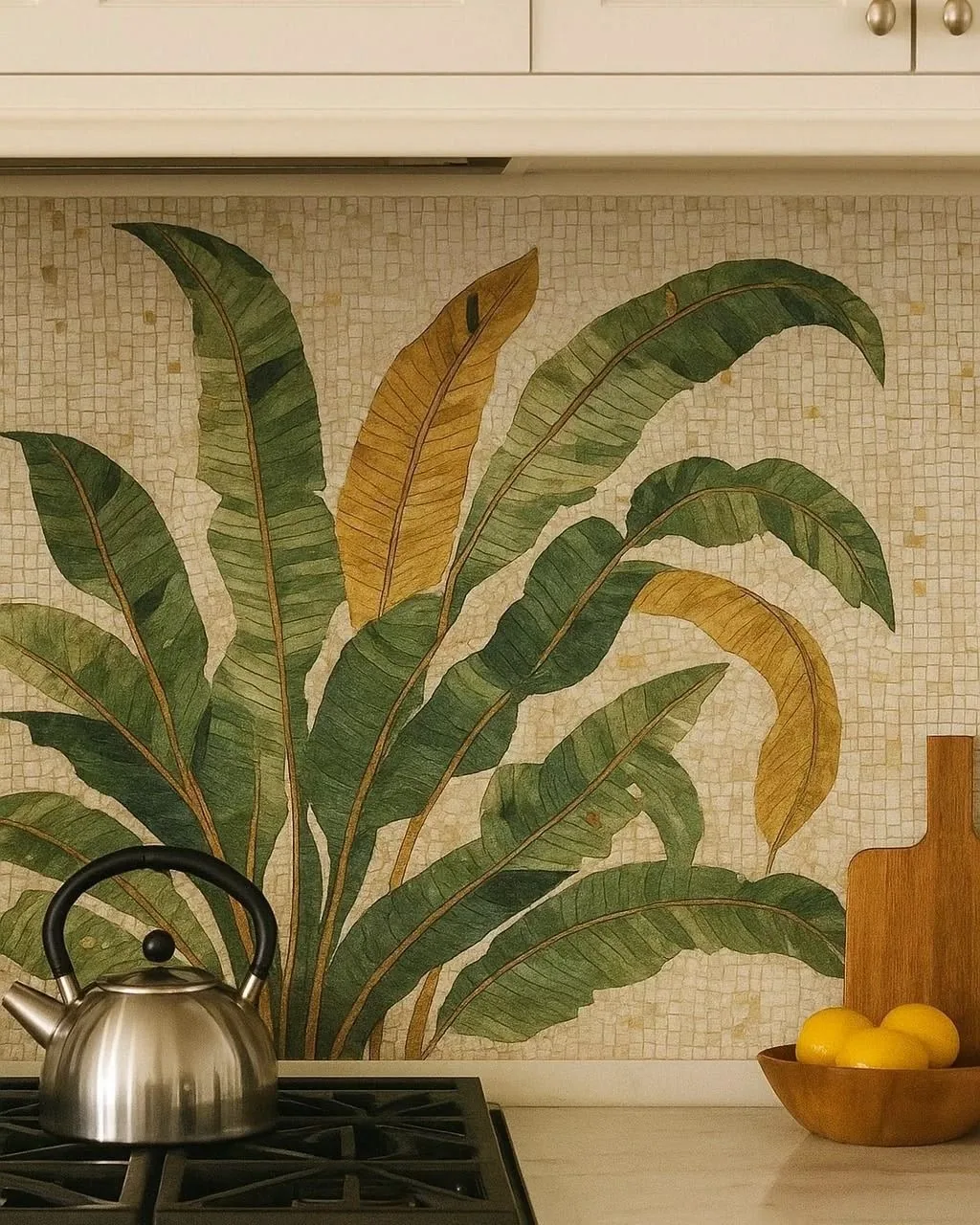
Marble gives inlay the sharpest colour contrast, sandstone the most grip and warmth, and limestone the quietest, most consistent field - here is how to choose. All three are supplied for inlay work, and a catalogue photo rarely makes the difference between them obvious - the three read as broadly similar until you compare how each one actually cuts, contrasts and wears once it's set into a floor people walk on every day.
Marble: the sharpest contrast, the most upkeep
Marble is what most medallions and mosaic work are cut from, and for a clear reason: its veining and colour range give the sharpest contrast between pieces, which is what makes a pattern read cleanly from across a room. That contrast comes with a trade-off - marble is the most porous of the three, and a polished marble floor needs sealing to resist staining and etching, a consideration we cover more generally in choosing stone for the Gulf climate. It's the right choice when the design depends on colour separation - a floral medallion, a pictorial panel - and the floor sits somewhere it will be looked after, not walked through in wet shoes straight off a terrace.
Sandstone: warmth and grip, less contrast
Sandstone's grain is coarser and its colour range warmer and more muted than marble's, so it gives less dramatic contrast between inlay pieces - a border or geometric pattern in sandstone reads as texture and tone rather than sharp colour separation. What it gives back is grip and durability: sandstone is naturally less slippery underfoot than a polished marble surface, and its density holds up well in higher-traffic border and banding work running along a corridor or entrance rather than a floor people cross barefoot.
Limestone: the quiet, consistent option
Limestone sits between the two - a finer, more even grain than sandstone, but a quieter, more consistent colour field than marble. It doesn't produce the same jewellery-like contrast a marble medallion does, which is exactly why it suits patterned floor inlay and larger banding runs, where the pattern needs to read as one considered surface rather than draw attention to any single piece. It's also generally the more forgiving of the three to live with day to day, without marble's sealing routine.
Finish changes the comparison again
Material is only half the decision - polished and honed are the two finishes we supply for inlay, and they change how each material performs, not just how it looks. A polished finish sharpens every material's contrast and colour, which is why most medallions are polished, but it also shows scuffing and wear sooner and is the more slippery of the two underfoot. A honed finish softens contrast slightly across all three materials but wears more evenly and hides everyday foot traffic - we go through both, and the other finishes across the catalogue, in six stone finishes, explained.
Matching material to the type of inlay
The material decision usually follows the type of inlay before it follows personal taste. A medallion or mosaic built around colour contrast leans toward marble; a border, patterned floor or larger field that needs to wear well over years of foot traffic leans toward sandstone or limestone. We go through the different types of inlay itself - medallion, mosaic, border, patterned floor, water-jet cutting - in stone inlay flooring, explained, which is worth reading alongside this if you haven't settled on the pattern yet.
If you already have a floor plan or a motif in mind, send it to us with the room's traffic and exposure - a foyer, a dry reception floor, a covered courtyard - and we'll recommend a material and finish honestly, including telling you when a design you like in marble would actually wear better in limestone.
Frequently asked questions
Which stone is best for an inlay medallion?
Marble, because its colour range and veining give the sharpest contrast between pieces, which makes a medallion or mosaic read clearly.
Is marble or limestone better for flooring?
Marble gives more contrast but is more porous and needs sealing. Limestone is quieter and more consistent, and generally more forgiving to live with.
Is sandstone slippery as a floor?
Sandstone is naturally less slippery underfoot than polished marble, which makes it a good choice for borders in busier corridors and entrances.
Should inlay flooring be polished or honed?
Polished sharpens contrast but shows wear sooner and is more slippery. Honed softens contrast slightly but wears more evenly and hides foot traffic.
Does marble inlay flooring need sealing?
Yes, particularly a polished marble floor, to resist staining and etching.
Ready to talk about your project?
Share your drawings or a reference photo and we'll come back with material options and an honest estimate.