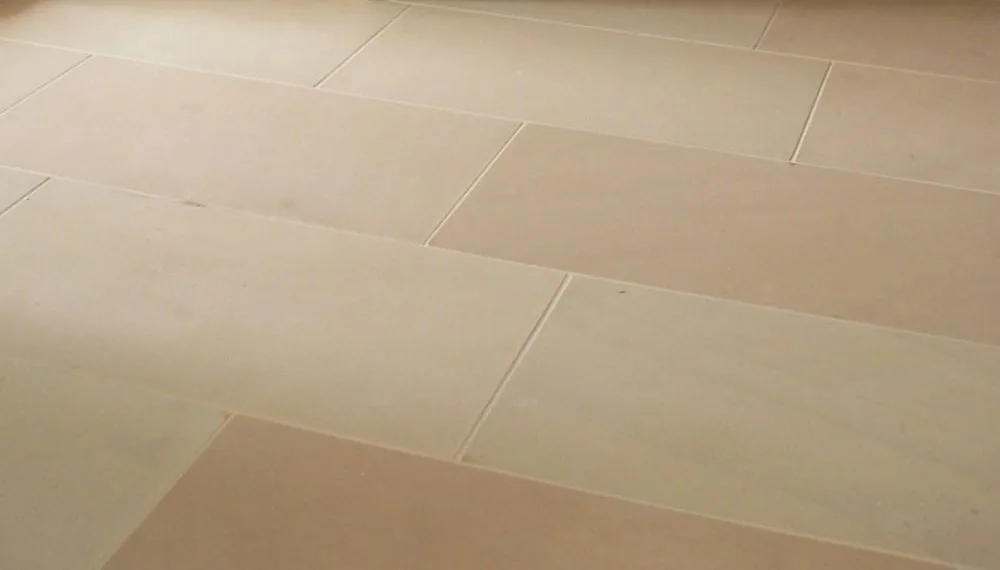
Sandstone, limestone or marble for the UAE? A practical guide to how heat, humidity and salt air affect natural stone, and which material suits which application. Most stone selection here happens on a screen, from a photograph, under studio lighting that has nothing to do with the site the stone will actually live on - which is how a beautiful material ends up discolouring, pitting or staining within a few years, not because it was low quality, but because it was never suited to this climate in the first place.
The Gulf is a genuinely difficult environment for natural stone: extreme heat, high humidity for much of the year, and along the coast, salt-laden air that finds its way into every pore a stone has. Here's how that actually plays out, material by material.
What heat does to stone
Direct sun on an exterior wall in the UAE regularly pushes surface temperatures well past what the same stone would see in a temperate climate. Darker stones absorb more heat and expand more than light ones, and repeated heating and cooling cycles - hot days, cooler nights - stress a stone's structure over years. This matters most for large exterior cladding panels and paving, less for an interior feature wall that never sees direct sun.
What humidity and salt air do
Porous stones absorb moisture, and moisture carries dissolved salts with it - from the air near the coast, or from groundwater inland. When that moisture evaporates from the stone's surface, the salts crystallise and stay behind. Over time this process, called salt weathering, can pit the surface, cause flaking, or leave a chalky bloom on stones that aren't suited to it. It's the single biggest reason a stone that performs perfectly in Europe can fail visibly in Dubai or Abu Dhabi within a handful of years.
Sandstone
Sandstone is one of the most forgiving choices for UAE exteriors - it's what most of the region's traditional architecture was built from, for good reason. It handles heat well and, in the right density and finish, resists salt weathering better than many softer stones. It's our default recommendation for carved feature walls and cladding that will sit in direct sun, and it's what most of our bespoke wall designs are carved in.
Limestone
Limestone is denser and typically more resistant to weathering than sandstone, with a cleaner, more uniform look that suits contemporary cladding and flooring - we've compared the two directly in sandstone vs limestone for cladding. Its main vulnerability is porosity in lower grades - not every limestone is equally suited to exterior use, and this is exactly the kind of thing to ask your supplier about directly rather than assuming from a photograph. A good honed or sealed finish makes a real difference here.
Marble
Marble is calcite-based, which makes it more reactive to both acid rain and salt exposure than sandstone or limestone. It's a poor choice for direct exterior use in a coastal climate, however striking it looks in a render - polished marble left outdoors here will dull, etch and stain faster than almost any other common stone. We reserve marble for interior work: flooring, feature walls, inlay and furniture pieces, where its colour and veining can actually be enjoyed without the climate working against it.
Finish matters as much as the stone itself
The same stone in a honed, polished or sandblasted finish behaves differently against heat and salt. Polished surfaces show etching and staining more visibly. Honed and bush-hammered finishes hide minor surface change far better over time, which is one reason they're so common on UAE exteriors regardless of which stone is used. Sealing helps every material, but it isn't a substitute for choosing the right stone for the application in the first place.
The practical takeaway
Sandstone for most exterior carved walls and cladding. Limestone where you want a cleaner, more contemporary exterior look and can confirm the grade suits outdoor use. Marble kept indoors. None of this is a hard rule - projects vary, and a shaded courtyard behaves differently to an open coastal facade - but it's the starting logic, and any supplier who understands this climate should be applying it before you even ask.
If you're not sure which material suits your project, send us your drawings or a site photo and tell us where it sits - coastal, inland, shaded, direct sun. We'll tell you honestly which stone we'd use, and why.
Ready to talk about your project?
Share your drawings or a reference photo and we'll come back with material options and an honest estimate.